
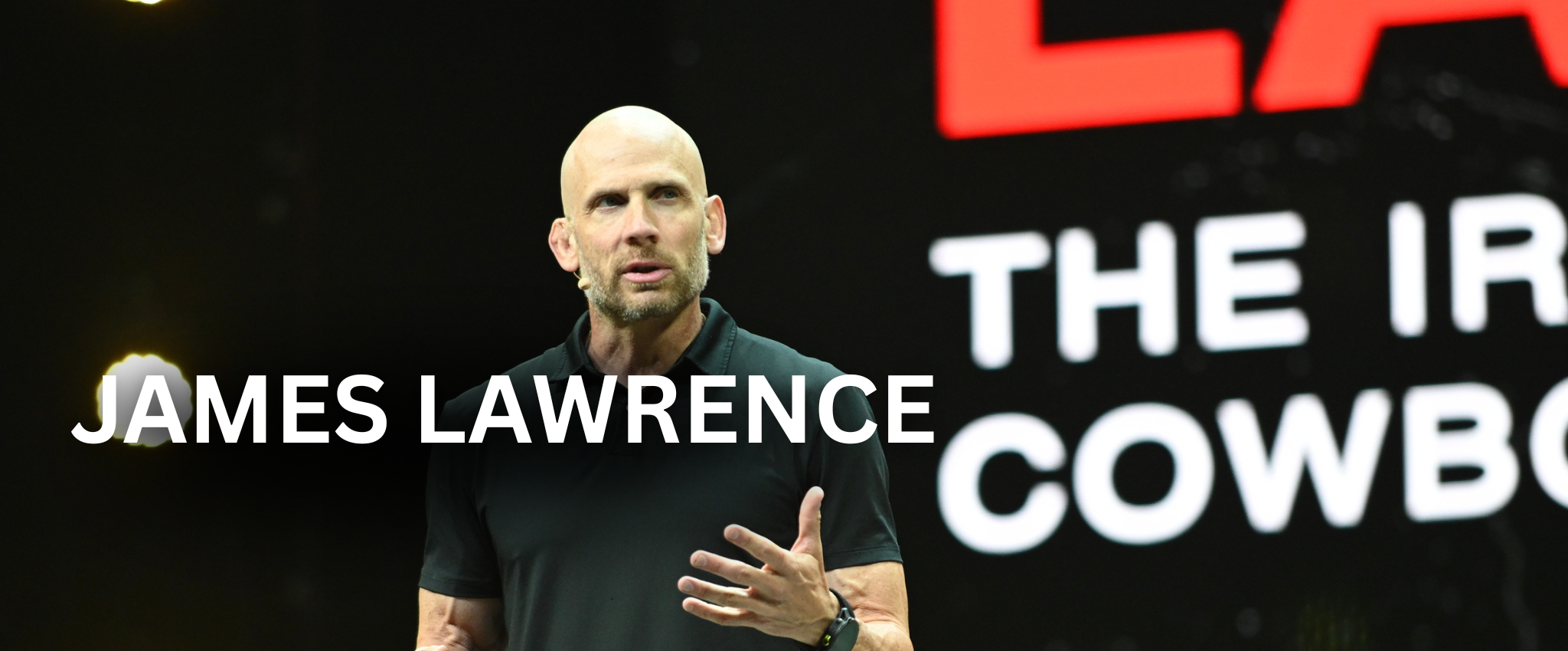
A hundred Ironman-distance triathlons in a hundred consecutive days sounds like a story about refusing to stop.
It is. But that is not the most useful part of the story.
If leaders look at James Lawrence’s extraordinary endurance achievements and conclude that high performance simply requires people to push harder, they miss the machinery beneath the headline: years of preparation, carefully designed systems, a trusted team, deliberate recovery and the discipline to focus on what matters today.
Extreme endurance does not teach us to operate at maximum intensity forever. It reveals what makes performance repeatable.
That distinction matters for anyone leading through change, pursuing an ambitious goal or trying to build a high-performing team without burning out the people responsible for the results.
Bring the goal back to the next 24 hours
An enormous goal can be motivating from a distance. Up close, it can become overwhelming.
One hundred consecutive full-distance triathlons is almost impossible to process as a whole. The same can be true of a multiyear transformation, an aggressive growth target or a major organizational change.
Lawrence’s response is to shorten the horizon. In a recent Instagram message, he encouraged people not to become consumed by what might happen months from now, but to focus on the next 24 hours and act on what they can control.
That is not a retreat from ambition. It is how ambition becomes executable.
Sustainable performers understand the destination, but they work from the next meaningful commitment:
What needs to happen today?
Which obstacle can be removed this week?
What is the next conversation, decision or action that will move the work forward?
People can stay engaged with a demanding goal when progress is visible and the next step is clear. The impossible becomes less intimidating when it is converted into a sequence of winnable days.
Build systems for the days motivation disappears
Motivation is powerful. It is also unreliable.
It rises after a strong result, a new beginning or an inspiring event. Then the work becomes repetitive, inconvenient or uncertain—and motivation stops showing up on schedule.
Lawrence frequently speaks about the difference between relying on motivation and building a system. One of his recent YouTube messages makes the point plainly: successful people are often “more automated than motivated.”
The objective is not to turn people into machines. It is to reduce the number of unnecessary negotiations required to do what matters.
For an athlete, that might mean preparing equipment the night before or following a fueling plan that has already been tested. For a team, it might mean establishing clear ownership, protecting focused work time, creating useful checklists or deciding in advance how predictable problems will be handled.
In a recent video about preparing for an Ironman, Lawrence highlighted how planning and practice can remove decisions when fatigue begins to affect judgment.
That same principle applies at work. The greater the pressure, the more valuable it becomes to have already clarified priorities, responsibilities and decision rules.
A strong system preserves energy for the decisions that genuinely require human judgment.
Create a minimum for imperfect days
Sustainable performance cannot depend on ideal conditions.
There will be days when time is limited, energy is low, plans change or unexpected demands take over. Treating every imperfect day as a failure makes consistency almost impossible.
In a Triathlon Nutrition Academy conversation, Lawrence described the value of having both a bare minimum and an optimal target. The optimal target defines what a great day could look like. The minimum keeps the commitment alive when the day does not cooperate.
This is a useful model for teams.
A difficult day may not allow for a perfect performance, but it can still include the one customer conversation that matters most, the essential safety check, the short planning session or the decision that prevents tomorrow’s problem.
The minimum should not become a permanent excuse for underperformance. It is a way to protect momentum without pretending that human capacity is identical every day.
Consistency is not perfection repeated. It is the ability to keep returning to the work.
Choose goals that are worth their cost
Every ambitious goal asks for something.
Time. Energy. Attention. Sacrifice. Sometimes more than expected.
Lawrence now evaluates potential challenges not only by whether he can complete them, but by what they will cost and what they will return to his family, community and personal growth.
That is an important question for leaders, too.
Not every demanding goal is meaningful. Not every opportunity deserves the strain it would place on a team. Sustainable ambition requires the courage to ask whether the outcome justifies the human cost—and whether there is a better way to pursue it.
The goal is not to prove that people can survive one impossible stretch.
It is to build the capacity to meet the next challenge without losing the people, health or purpose that made the work worthwhile in the first place.
Sustainable performance is designed
Extreme endurance makes one truth impossible to ignore: effort has limits, but capacity can be developed.
It is developed through foundations rather than shortcuts. Through systems stronger than passing motivation. Through recovery planned as deliberately as exertion. Through people who trust one another and a purpose capable of outlasting the applause.
James Lawrence’s story begins with an extraordinary distance. Its most useful lesson, however, is much closer to home.
Lasting performance is built one well-designed day at a time.
To bring these lessons on resilience, mindset and meaningful performance to your organization, explore James Lawrence’s Redefine Impossible keynote.