
What We're Seeing in the Market
"Change management" and "AI adoption" are often the same conversation now.
Organizations engaged in talks around leading change inevitably have to talk about AI. AI is the biggest disruption most of your teams are living through right now. Find a speaker who can address both, and you’ll meet your people’s most pressing needs without needing two separate sessions.
The most successful change initiatives incorporate "soft" skills like trust and resilience.
Most change rollouts stall halfway through, and it's rarely the plan that's the problem — it’s that your people either hit a wall or lack trust in their leaders. The change management speakers making the biggest impact right now are equipping leaders and teams with the skills to build trust, resilience, and psychological safety, because that's what actually moves people forward during change.
The best teams aren't just surviving disruption — they're using it to get ahead.
As change becomes a permanent fixture, leaders and teams are looking for new ways to see change. Instead of asking "how do we cope with constant change," the ones who thrive are asking, "how do we spot the opportunity hiding inside the chaos?" That flip in perspective energizes teams rather than deflates them, allowing them to leverage change for growth.
What's Working
for Our Clients
Our Change Management Speakers
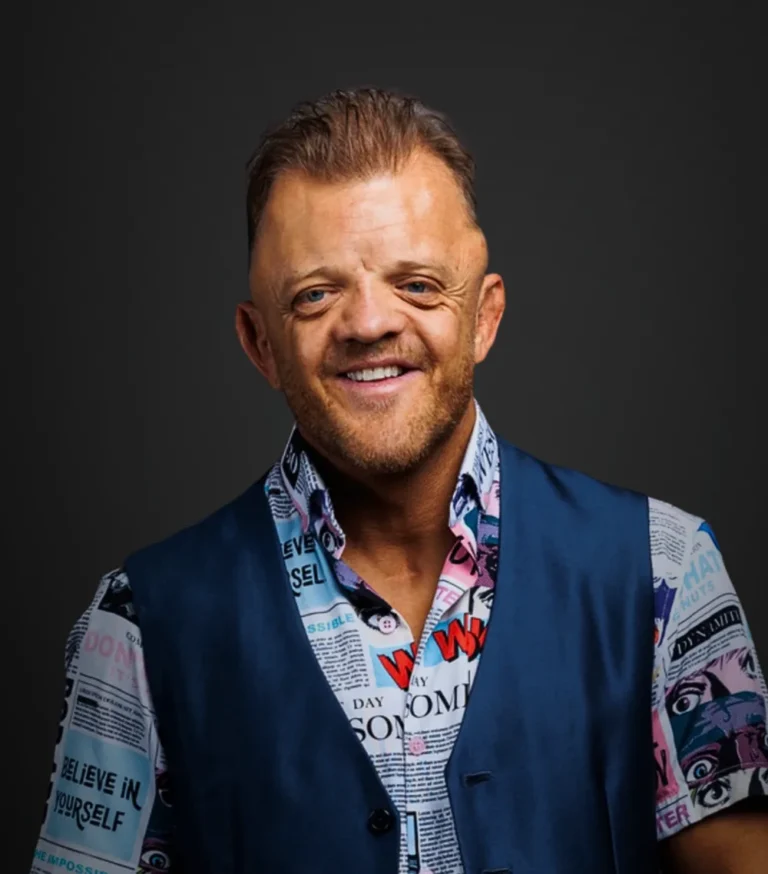 Ben KjarGreco-Roman World Champion, Subject of Award-Winning Documentary, Real Estate Entrepreneur, and Keynote Speaker
 James LawrenceEndurance Athlete, Author, Speaker, and Family Man
 Mike RayburnInnovation Expert, Hall of Fame Speaker, World-Class Guitarist, and Carnegie Hall Headliner
 Mike WalshGlobal Authority on AI-Driven Transformation, Bestselling Author, Strategic Advisor, and HBR Columnist
 Scott StrattenFounder of the UnMarketing Movement, Bestselling Author of 7 Books, and Hall of Fame Speaker
 Sean BottExpert on High-Trust Cultures and Psychological Safety, Mentalist, Keynote Speaker
 Tim SandersChief Innovation Officer at G2, Executive Fellow at Harvard Business School, Applied AI & Leadership Keynote Speaker
 Ty BennettBestselling Author, Global Entrepreneur, High-Performance Researcher, and Keynote Speaker
FAQs
Is change management still a useful topic when change is constant?
Yes. In fact, constant change makes the topic more important. Organizations increasingly need leaders who can guide teams through repeated shifts without treating every disruption as an isolated event. A strong keynote can help establish a common approach that leaders can use across multiple transformations.
How do we avoid a change keynote that feels disconnected from reality?
Choose a speaker who is willing to understand your current environment and acknowledge the complexity your people are facing. The right keynote speaker will take the time to understand your audience’s challenges and needs, and they won’t minimize uncertainty or present change as effortless. Credibility comes from combining a realistic view of disruption with practical ways forward.
Can a change management keynote work for employees as well as senior leaders?
Yes, but the keynote should be tailored. Senior leaders may need to focus on strategy, trust, sponsorship, and decision-making. Managers may need practical tools for communication and implementation. Broader employee audiences may benefit from a clearer understanding of adaptability, agency, and how to operate amid uncertainty. Talk to us about your goals and audience, and we’ll help you find a speaker who is the right fit for your event.
Should an AI transformation keynote and a change management keynote be separate?
Not necessarily. AI adoption goes far beyond a software rollout — it reshapes how people work, how leaders lead, and what gets encouraged and rewarded. SHRM’s 2026 workplace survey found that 34% of workers don’t use any AI tools at all, even as organizations roll them out — because implementation is not the same as adoption. A speaker who can address both the human side of change and the AI disruption driving it saves you a session and meets your people where they actually are. cmi can help you identify which speaker can credibly hold both conversations.
Is change management a leadership problem or a culture problem — and does it matter which one we hire for?
It matters significantly. Culture problems are slow to move and require sustained intervention — a keynote alone won’t fix them. Leadership behavior problems are faster to address because they’re specific and teachable. The root cause of most failed change initiatives is almost never the technology or the plan — it’s the human side: resistance from employees, misaligned leadership, and poor communication. Most change problems that feel like culture problems are actually leadership behavior problems in disguise. cmi helps you identify which type of problem you’re solving before recommending a speaker.
How do we build the case internally for investing in a change management speaker when people are already overwhelmed?
This is really a cost-reduction conversation, not a professional development expense. The majority of change initiatives — 60 to 70% — fail to achieve their goals, primarily due to employee resistance and lack of management support. A failed change initiative costs far more than a keynote — in lost productivity, rework, disengagement, and turnover. A speaker who gives your leaders the specific tools to reduce resistance and build trust is an investment in making your initiative succeed, not a line item to cut.
What kind of change management keynote will help your organization with their initiative beyond the event?
Three things: specificity, reinforcement, and timing. The content should be concrete enough that people remember what to do, not just how they felt. There should be something after the keynote — a guide, a follow-up resource, a manager toolkit — that keeps the message alive. And the keynote should happen close enough to the change itself that people can apply what they learned immediately. Most organizations struggle to capture value not because the strategy fails but because their people, processes, and politics get in the way. The speakers cmi represents design their content for application, not just inspiration.
Can a change speaker help with employee resistance?
Yes, but the best speakers do not simply label people as resistant. They explore what may be driving hesitation—such as loss of control, lack of trust, unclear consequences, previous failed initiatives, workload pressure, or insufficient involvement—and help leaders respond more effectively.
What should attendees be able to do differently after a change management keynote?
They should leave with a clearer way to interpret change, communicate through uncertainty, recognize fatigue, build trust, identify opportunities, and take practical next steps. The most effective sessions narrow the message to a few behaviors people can remember and use immediately.
Will your change management speakers customize their talk to our workforce challenges?
Yes, absolutely. All of our change management keynote speakers will ask questions to understand your unique challenges and workforce, so they can deliver the tools, insights, and behaviors that will best help your audience.