
Curmudgeons ‘R' Us...
AI may be one of the most powerful tools organizations have ever had but for many teams, it’s also one of their biggest challenges.
The technology is evolving quickly. The opportunities are enormous. But getting people aligned, open to change, and ready to embrace what’s next? That’s where things can get complicated.
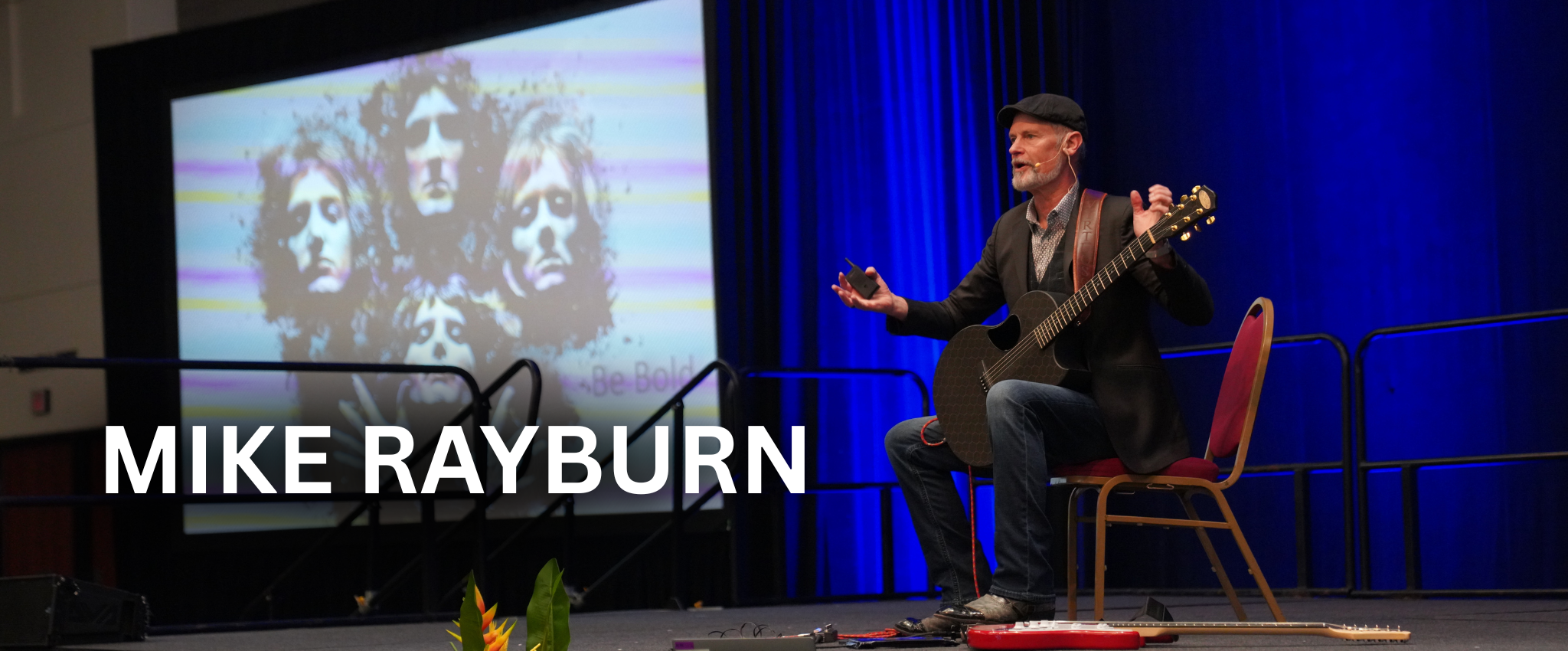
So, we asked Mike Rayburn what leaders can do when AI and innovation are met with resistance and how they can help their teams move from fearing change to creating it. For Mike, the answer starts with what he’s seeing firsthand in conversations with organizations across the country:
Curmudgeons 'R' Us...
Weeks before every keynote presentation I deliver, I have a pre-event design call with my clients to clarify their needs and work out the details of how my performance will address their theme and challenges. For the past three years the number one challenge - challenge - with every client is exactly the same: AI. They all say that. What’s the latest? How do we use it? What are the dangers? Will it replace me? Are my competitors using it better? And most importantly, will there be a robot uprising? (Sometimes my Roomba is warm in the morning).
Now, I imagine that’s not a surprise to you. However, did you notice what I tried to make pretty obvious? They all count AI as a challenge. An issue. Even a problem. Here we are with the most powerful technological tool ever invented, one that offers endless, exponential opportunities… yet we see it as a problem?
Why?
While I am no expert on the inner workings of AI (or I’d be a lot richer), I am definitely an expert on why AI is seen by so many as a challenge: It means change. Serious, disruptive change.
And as you well know, there are still countless team members in almost every organization who just. don’t. like. change. They fear it. They dread it. They avoid it. And quite frankly they don’t want to even hear about it. (Picture fingers in ears chanting “la-la-la-la-la…”)
One client from about two years ago, whom I’ll keep anonymous, is a global brand with offices in every major city in the US. The leader of their Houston office contacted me a few days after my program, kind of “off the record,” explaining that his team has many members who, to varying but stifling degrees, don’t like change. He was asking me how he could get them on board?
Here is the eight-step process I shared with hime and I offer this for anyone with team members who range anywhere from “change isn’t my favorite” to “FAX MACHINES FOREVER!”
Assemble your team for this discussion and walk them through this process. The key is to begin by getting agreement, and then let that lead them logically to the genuine need for change.
- Ask everyone, “Can we agree that the customer comes first They answer yes.
- Can we agree that we not only serve our customers, we serve each other, we make work better, we’re members of a team, right? They answer yes.
- Can we agree that in this world change will happen no matter what we do or don’t do? They’ll have to answer yes.
- Now get the temperature of the room. How many of you love change? How many of you are cautious about change but open to it? And how many of you like things just as they are and just plain don’t want change? This gives you the temperature of the room.
- Can we agree that positive change is good? It’s just the negative change, or the possibility of negative change that we don’t want? Most will agree. If some are still on the fence ask them, “OK, if your bank account suddenly had an extra $1M that would be a positive change?” OK, so we do like positive change.
- Cast a vision. “Knowing that we are here to serve our customers better, and to serve each other better, imagine…” and then spell out your ideal vision… customers, work environment, sales and revenue, making a positive difference in the world. Make this a stunningly beautiful vision for the future.
- Bring it together. Given that we are all working toward this glorious vision, and that change will happen regardless, do we want to change, or be changed? Do we want change to come from us, or do we want change to happen to us? Do we want to give up control and simply react to change that will happen regardless, or do we want to step forward and create and lead change? There should be some realizations here, some aha moments.
- Conclusion. Change - in this case AI - is the key to serving your customers on a world class level, creating a better work environment, growing your sales and revenue, scaling your business, and ultimately realizing the vision you’ve created.
Bonus point: Here’s the best part! When you create an organization with a posture and reputation for creating and leading change, even when negative change happens - an economic downturn, a terrorist attack, legislative surprises - your forward motion and proactivity makes you stronger and better able to handle the unwanted surprises.
Peter Drucker said it perfectly: Managing change is not only stupid, it’s dangerous. The only way to manage change, is to create change. AI is your single best way to create change.
AI will continue to evolve, and change will continue to come with it. But as Mike outlines, helping your team embrace that change doesn’t have to be complicated. These simple steps can help leaders build alignment, shift perspectives, and empower their people to move from reacting to change to actively creating it.
Sometimes, the biggest innovations start with a simple conversation.